The translation of the Book of Abraham has a lot of complicated moving parts. There are no eye witness accounts as to the process of the translation other than that it was given by revelation.
Jul, 3, 1835
Michael Chandler comes to Kirkland with Egyptian papyri. After Joseph Smith was able to give the interpretation of some characters, Chandler gave him a certificate saying that among those that he showed the manuscripts, Joseph was most qualified in translating.[1]
Jul, 6, 1835
After purchasing the papyri, Joseph begins translating some of the characters with Phelps and Cowdery as scribes and finds out that the rolls contained the writings of Abraham.[1]
~ Jul 1835
For the rest of the month, Joseph is continually engaged in "translating an alphabet to the Book of Abraham, and arrangeing a grammar of the Egyptian language as practiced by the ancients"[2]
Sep, 11, 1835
By early fall, the translation was suspended.[3]
Oct, 1, 1835 to Oct, 7, 1835
Nov, 19, 1835 to Nov, 25, 1835
Dec, 16, 1835
Joseph Smith showed the mummies and papyri to visitors and preached to audiences on the doctrine from the Book of Abraham.[14]
Jan, 4, 1836
Joseph Smith's study of Hebrew diverts his attention away from the Book of Abraham.[15]
Feb, 15, 1838
"I have set by his [Joseph Smith's] side and penned down the translation of the Egyptian Hieroglyphicks as he claimed to receive it by direct inspiration of heaven." - Warren Parrish
Mar, 20, 1839
While in a prison in Missouri, Joseph Smith writes an epistle to the church and speaks of a "councyl of the eternal God of all other Gods before this world was." (Doctrine taught in Abraham 3:26)[17]
~ Aug 1839
Joseph Smith teaches that "the father called all spirits before him at the creation of Man & organized them." (Doctrine taught in Abraham 3:18-26)[18]
Jan, 5, 1841
Joseph Smith teaches that "Spirits are eternal" and that "at the first organization in heaven we were all present and saw the Savior chosen and appointed, and the plan of salvation made and we sanctioned it." (Abraham 3:18, 27)[19]
Feb, 6, 1842
A Time and Seasons publications states that "we had the promise of Br. Joseph, to furnish us with further extracts from the Book of Abraham." These extracts never came.[20]
Mar, 1, 1842
Mar, 8, 1842 to Mar, 9, 1842
Mar, 15, 1842
Times and Seasons publishes the second installment of the Book of Abraham. This installment completes the text of the book.[26]
Mar, 16, 1842
The final installment is published in the Times and Seasons. This installment simply has the final facsimile.[27]
On November 27th, 1967 some of Joseph Smith's papyri, though to have been burned in the Chicago fire of 1871, were found in the Metropolitan Museum of Art and transferred to the Historian’s Office of the Church of Jesus Christ of Latter-day Saints
. This created quite the buzz among both LDS and non-LDS scholars because now that they had the source text for the Book of Abraham, they could create a seemingly falsifiable test for Joseph Smith's prophetic abilities to translate ancient scripture.The papyri was translated and found to be fragments of the Book of Breathing for Horos, an ancient Egyptian funerary text
. The question then became "Is this actually the source for the Book of Abraham?" Both sides sent their responses: the Tanners made an article using the Book of Abraham manuscripts as evidence to show that the extant papyri was the source of the Book of Abraham. Hugh Nibley made a response indicating that what we have is not the source because most of it was still burned in the Chicago fire or that Joseph Smith could have used these papryi has a catalyst for revelation . These still stand, essentially, as the theories today for the source text for the Book of Abraham. Let's go through the evidences for each.The Current Document Theory is that Joseph Smith translated the Book of Abraham from the extant papyri fragments that the church now owns. Because both LDS and non-LDS scholars agree that the Book of Abraham text does not exist on these fragments, this theory is usually held by those antagonistic to the church and by those that wish to discredit Joseph's ability to translate. This theory attempts to use three pieces of evidence to support it: Egyptian Alphabet/Grammar Alphabet of Egyptian Language, Book of Abraham translation manuscripts, and Joseph's journal showing the timeline of the creation of these documents.
From Joseph Smith's journal, we learn that the first translation effort was done soon after buying the papyri from Michael Chandler with Phelps and Cowdery acting as scribes for this translation
. We have a manuscript written by Phelps that is likely the result of this translation effort and consists of Abraham 1:1-3 . It is just enough text to conclude that "one of the rolls contained the writings of Abraham". It is also the only manuscript to contain a translation of these verses.After working on the Egyptian Alphabet and Grammar Alphabet of the Egyptian Language, Joseph Smith finished translating the Book of Abraham through chapter two
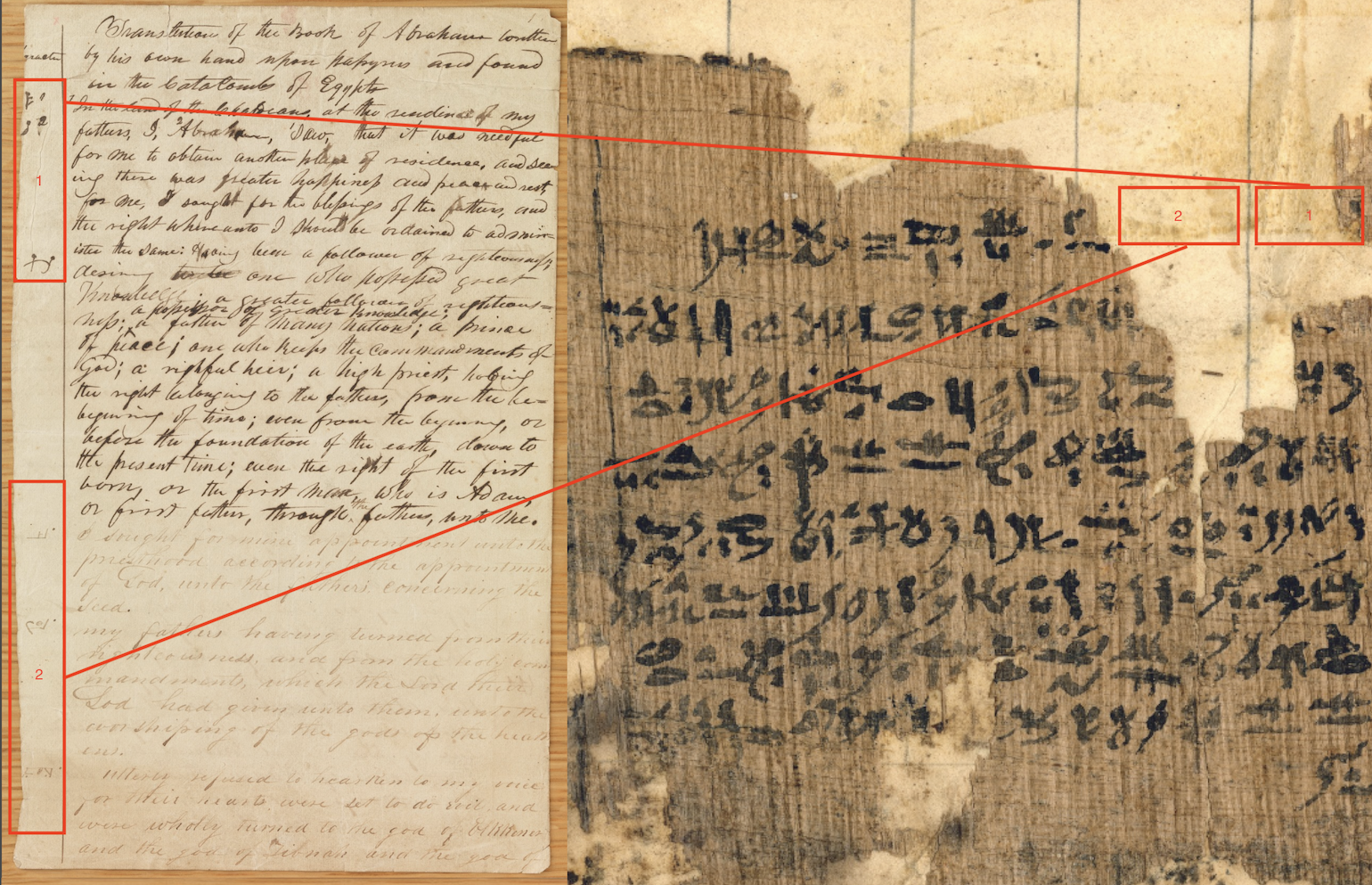
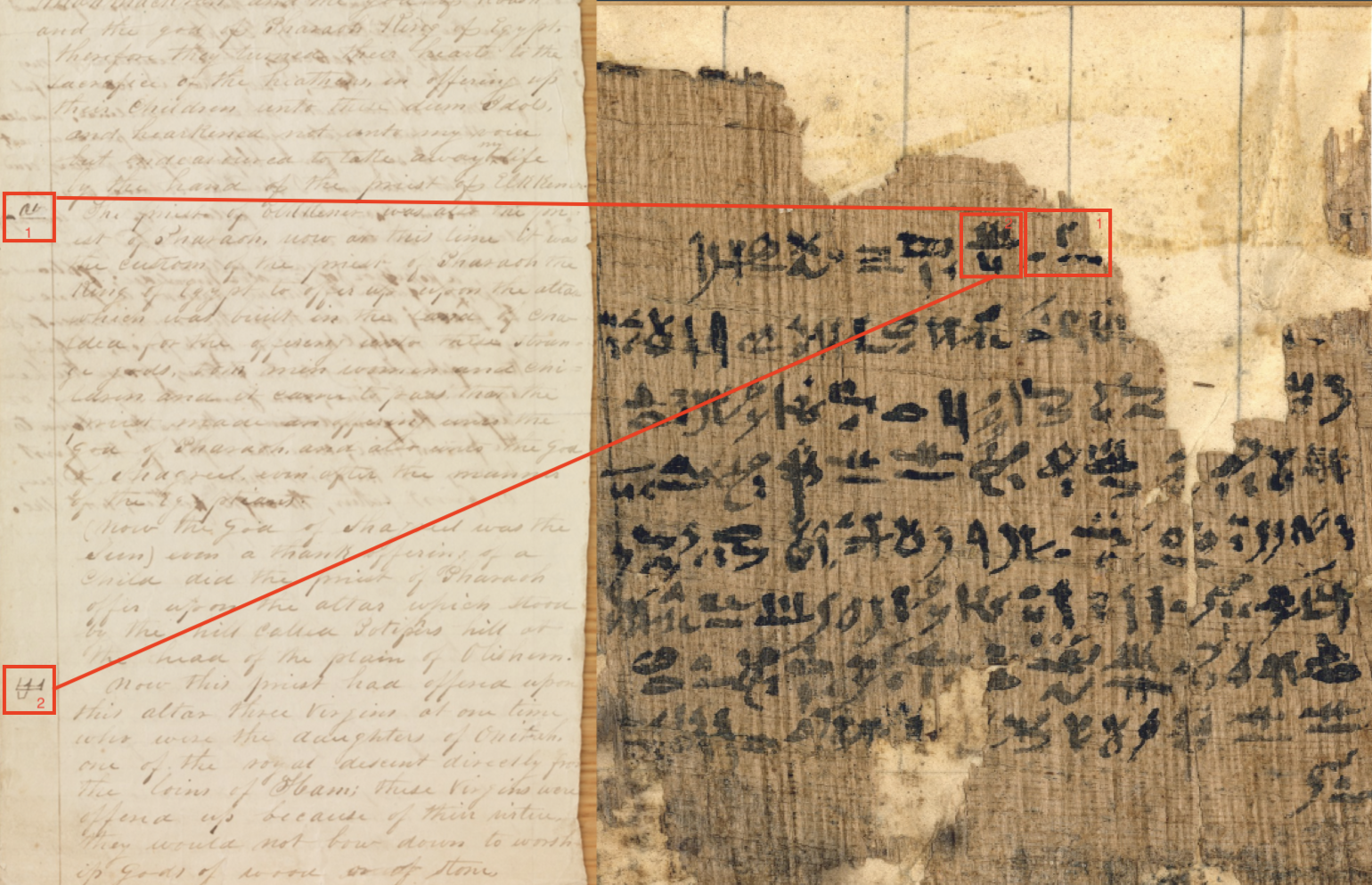
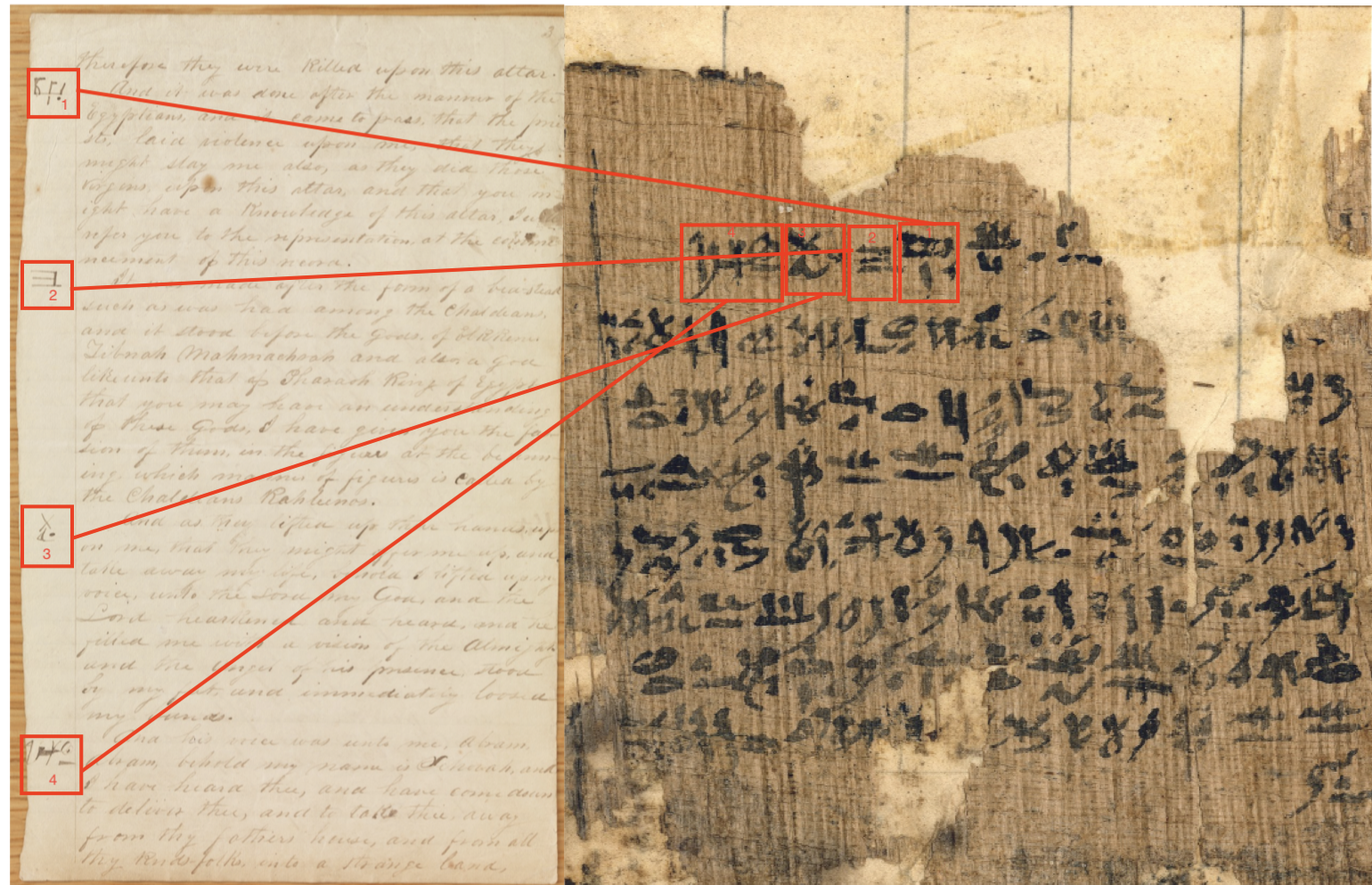
. We have the manuscripts that are a result of this second translation endeavor as Book of Abraham manuscripts A, B, C written by Williams and Phelps . Each of these manuscripts has Egyptian characters that show up in sequence next to Facsimile 1. These characters are written in the left margin with the Book of Abraham English text to the right of it signifying a translation of the characters.Manuscripts A, B, and C each have roughly the same content on them, except manuscript C has the full Abraham 1:1-2:18 translation. We will thus go through each character on the left side of the margin in this manuscript to show how it matches up in sequence with the text next to Facsimile 1. This approach can be copied for manuscripts A and B.
To start, The first characters translate to actual Egyptian characters according to other Book of Breathings papyri, which indicates that this part of the Joseph Smith papyri existed as Joseph was translating and only later fell off. The next three characters are made up, which signify that there was an already existing gap. The manuscript's characters then continue in sequence until the end of the line
.The next character is a real character from the Book of Breathings showing that it existed for Joseph. After that, the next three characters are not real, again showing that there was already a gap there. The characters again continue in sequence until the start of the fourth row of the Book of Breathings (except one character that is not extant in the final gap).
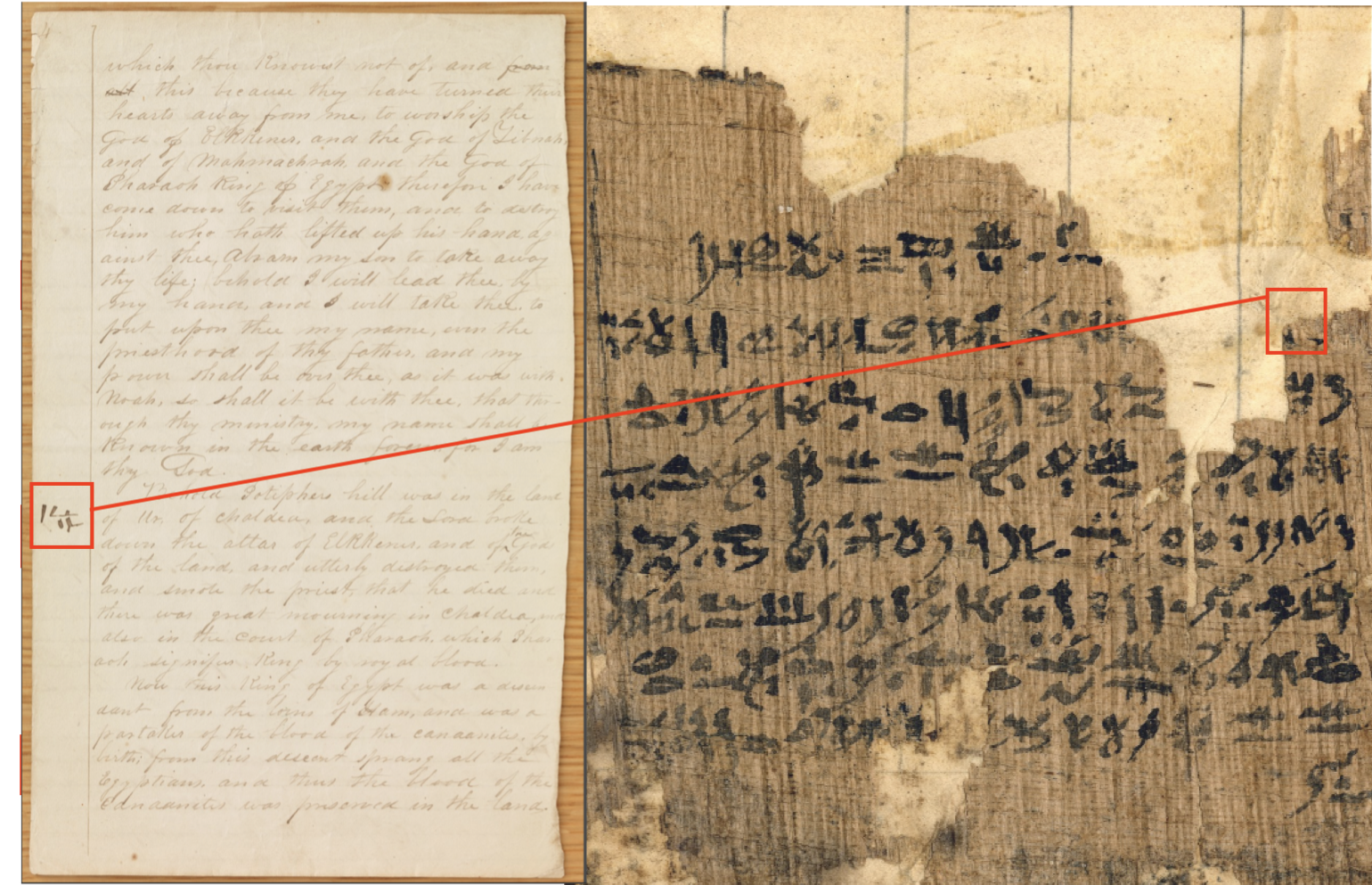
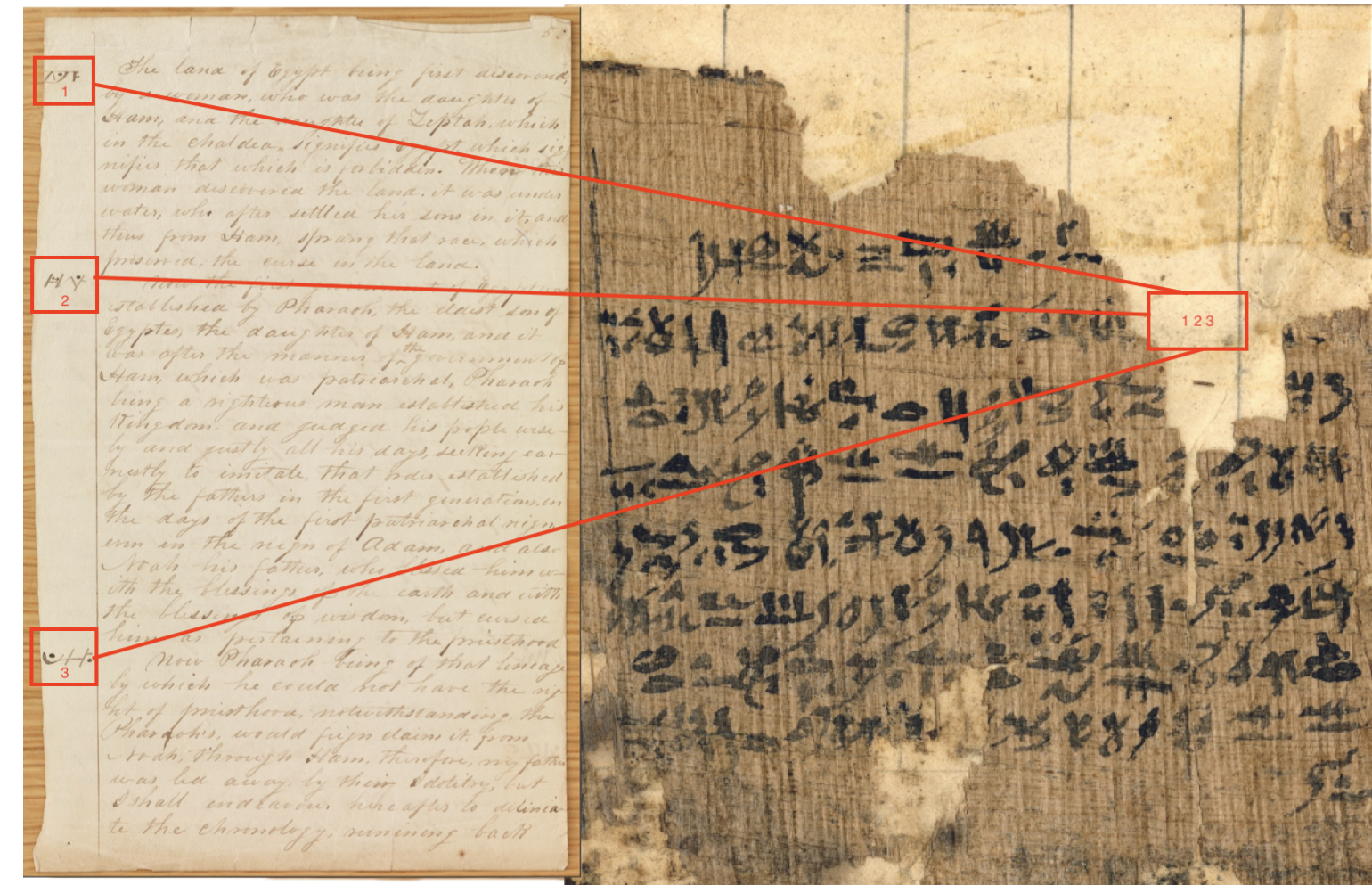
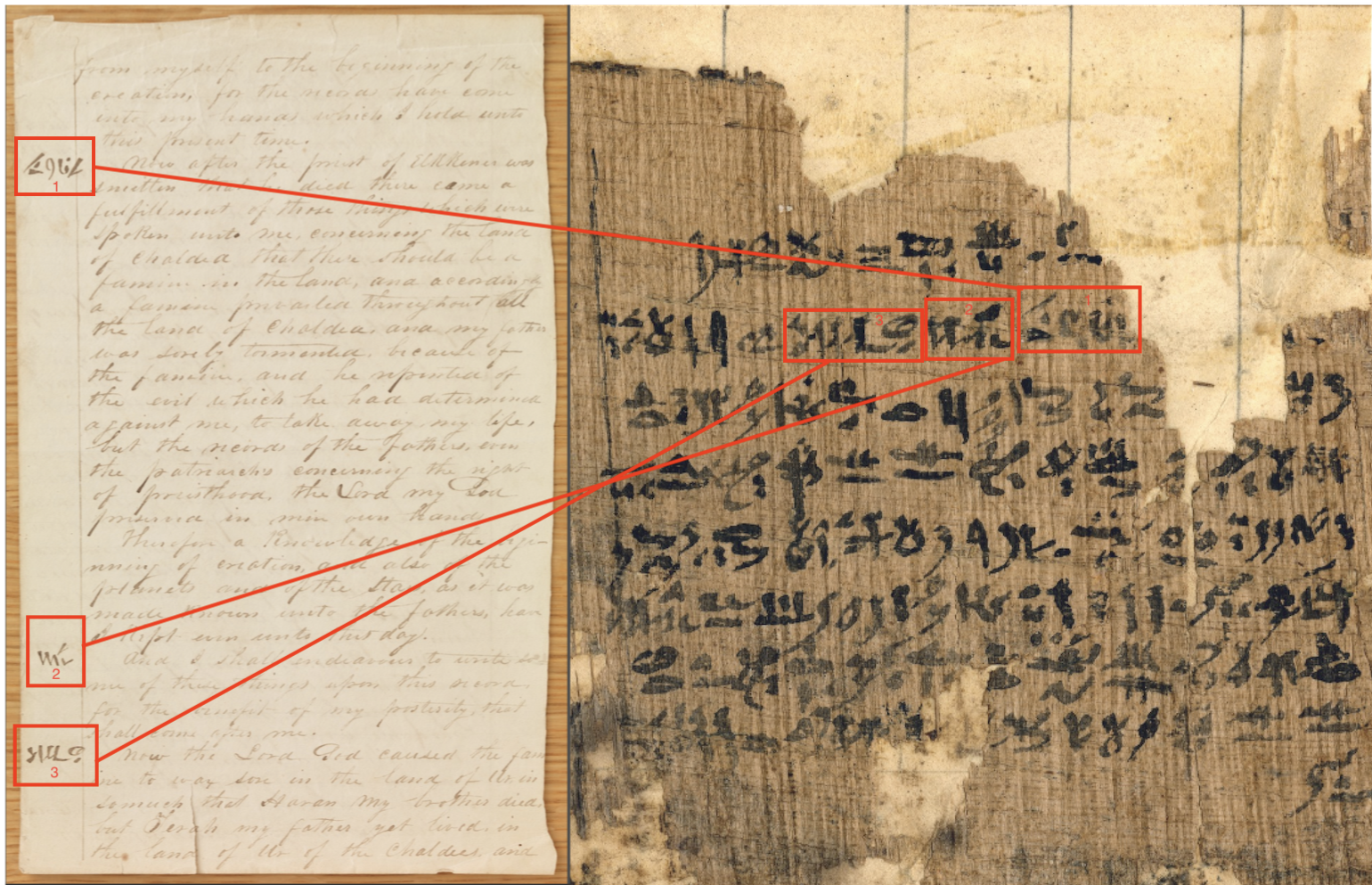
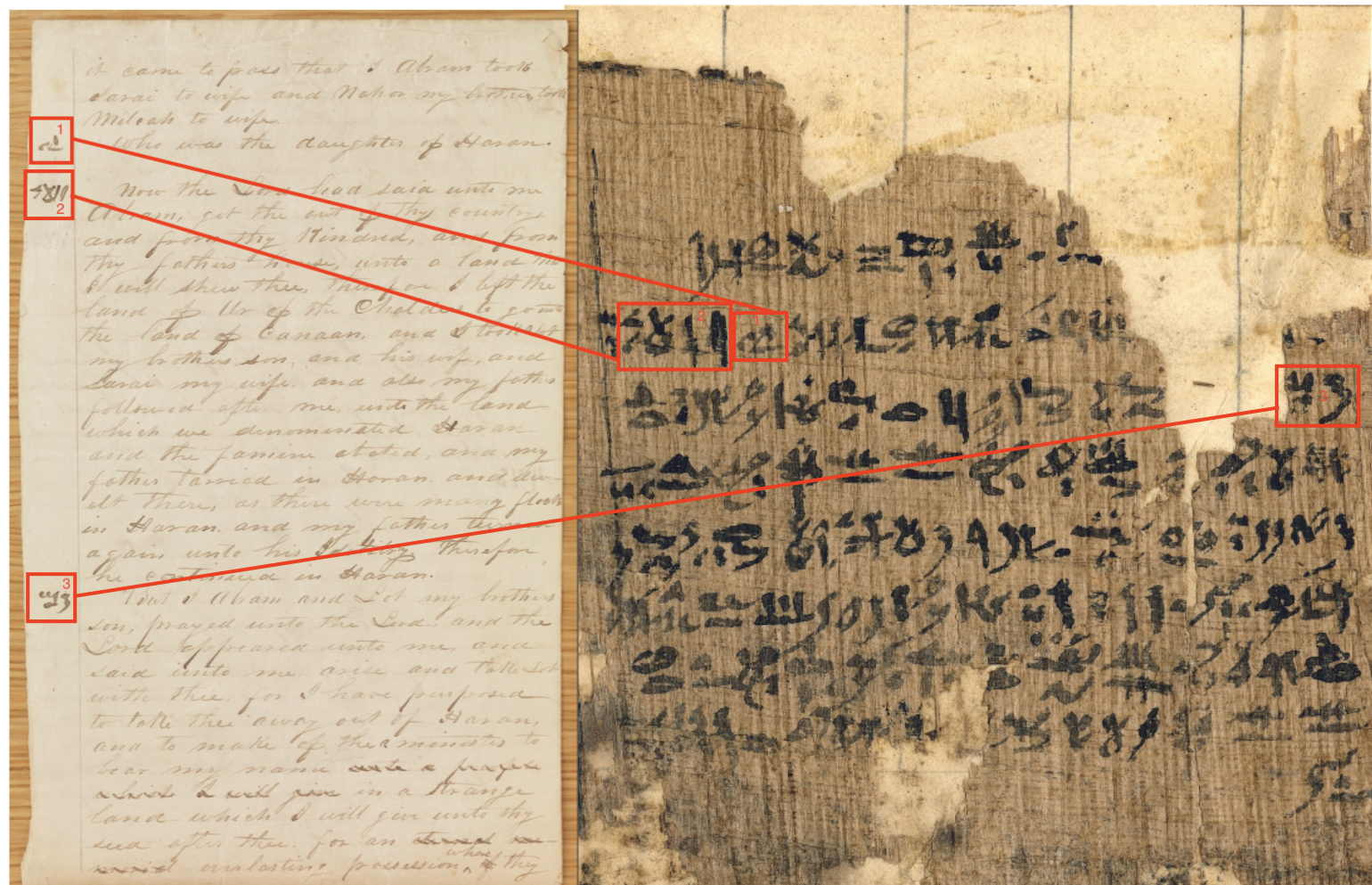
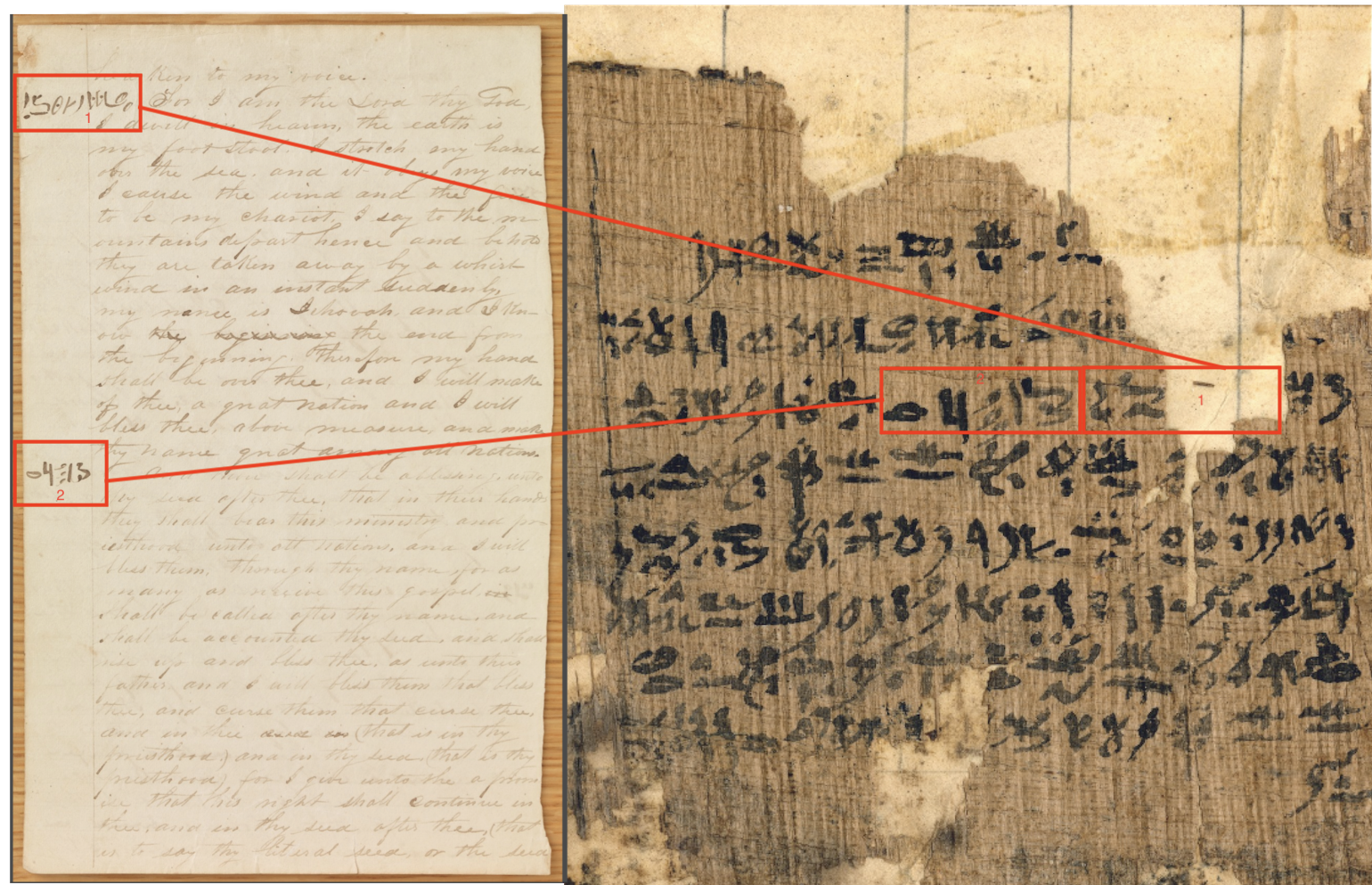
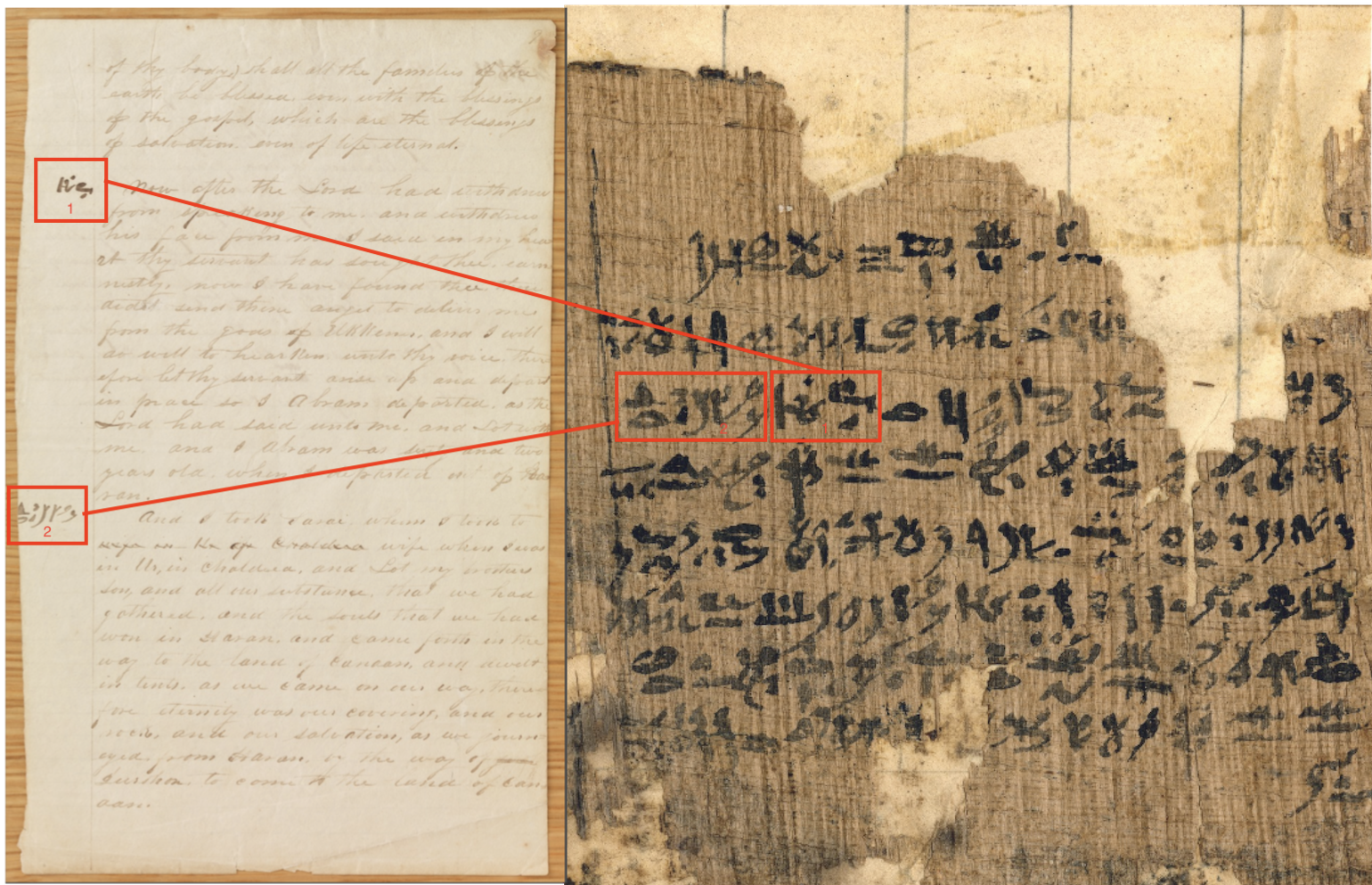
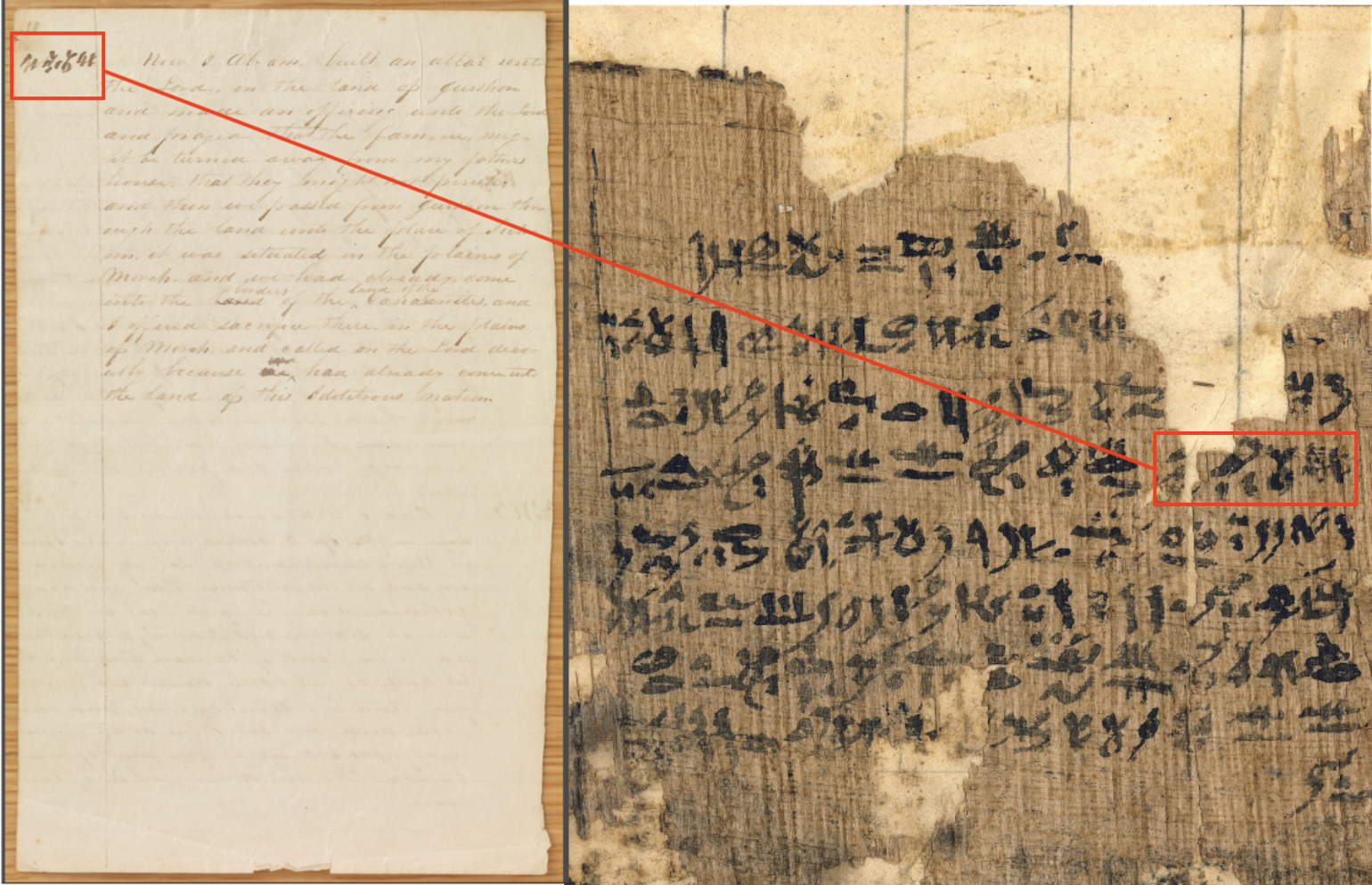
Because the relationship between these characters and the Book of Abraham text is not explicitly stated, some assume that the characters were put there by someone other than Joseph after the revelation was already completed. But there are a few evidences that point to a literal translation from Joseph Smith. For example, at the top of Manuscript C, on the left is the word "characters" and on the right reads "Translation of the Book of Abraham written by his own hand upon papyrus and found in the CataCombs of Egypts," which implies a translation.
We also have a couple eye-witness testimonies that cooberate this interpretation. For example, a quote from William Parrish reads:
"I have set by his [Joseph Smith's] side and penned down the translation of the Egyptian Hieroglyphicks as he claimed to receive it by direct inspiration of heaven."- William Parrish
There is also a quote reportedly from Lucy Mack Smith that shows Joseph Smith was able to see which characters were in the gap of the papyri. This means that the probability of someone else inserting the characters after the revelation was already complete is less likely because there would be no need to have to make up characters in the gaps when Joseph Smith already had the ability to know what the correct characters were.
"when Joseph was reading the papyrus, he closed his eyes, and held a hat over his face, and that the revela- tion came to him; and that where the papyrus was torn, he could read the parts that were destroyed equally as well as those that were there"- Lucy Mack Smith
Whether or not manuscripts A and B from Williams and Parish are the originals is important in deciphering whether we are to go with the extant papyri theory or the missing scrolls theory. If these manuscripts are original, written during Joseph Smith's dictation of the translation, then this shows that he was translating from the extant papyri. We can in fact provide evidence that these documents were created simultaneously at the same time during Joseph's dictation.
The first thing that points to a simultaneous dictation is that there are similar edits in each manuscript. If they were copying from another source, there would be no need to have these edits instead of just copying the correct text. Another example is the difference in the God ElkKeenah vs. Elkkener, which shows a dictation error. We also have differences in "thee vs. the" and "son vs. sun." These are more likely to be dictation errors than copying errors.
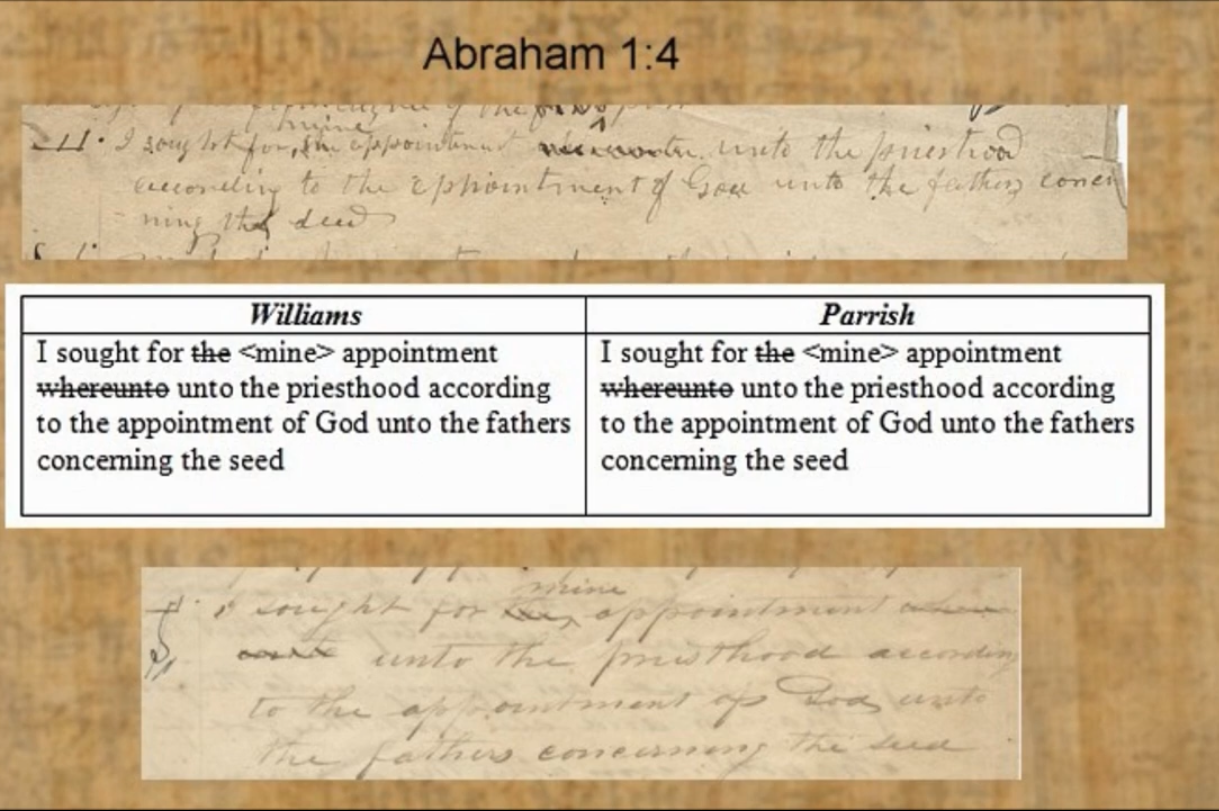
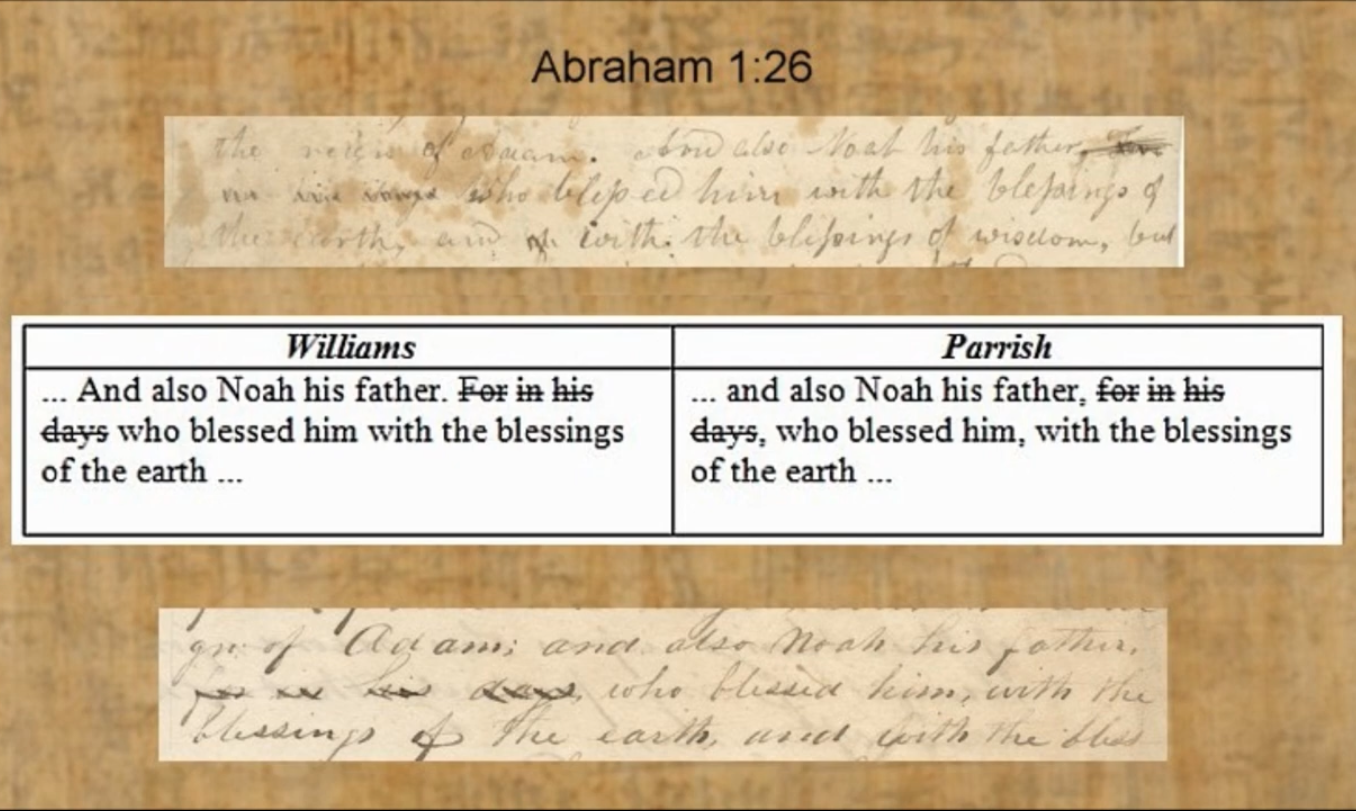
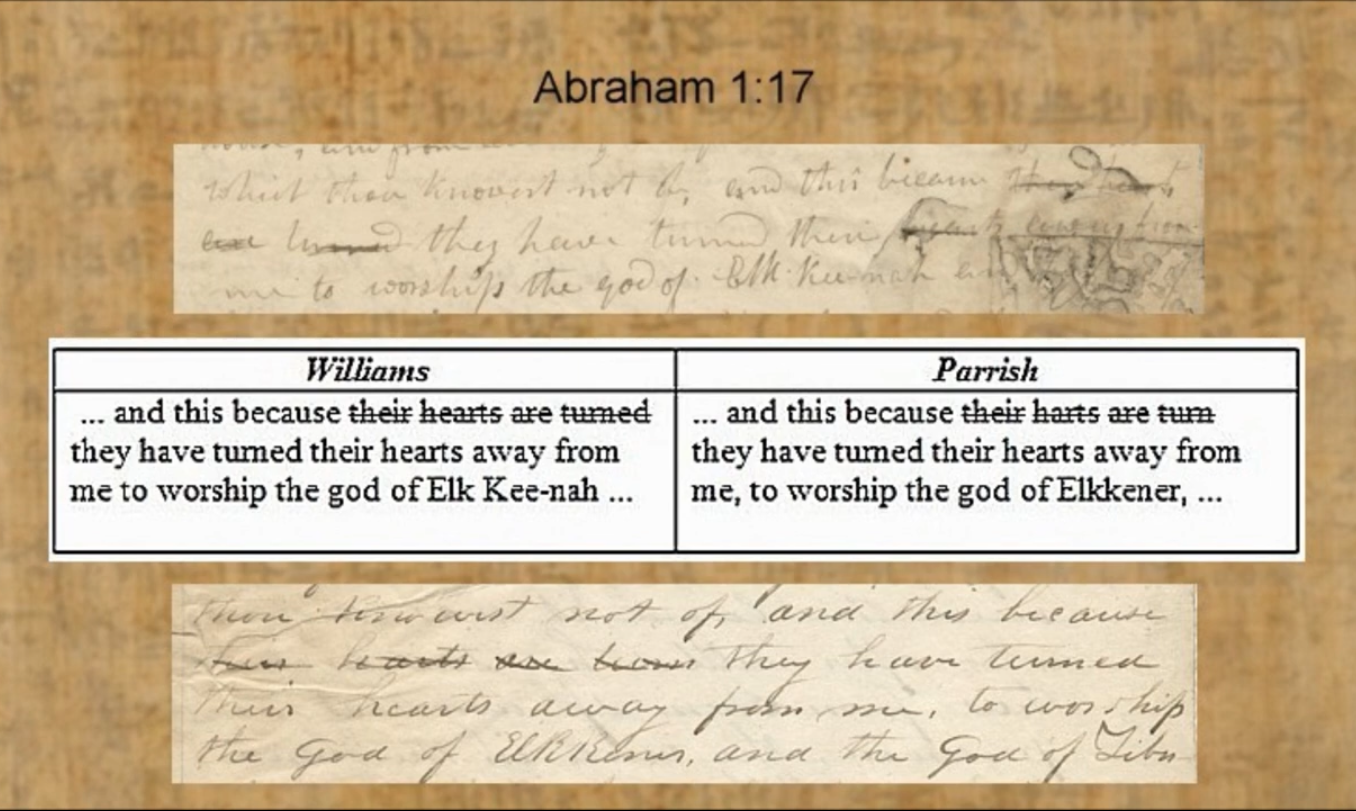
Showing that these are likely the original translation manuscripts also shows that the translation happened after the work done on the Egyptian Alphabet. This is seen by the title of the Williams and Parrish manuscripts "Sign of the fifth degree of the second part" where the alphabet and grammar go up to the fifth degree of the first part.
Joseph Smith's journal gives a likely date for the dictation of these documents as November 19th and 20th, 1835
.The purpose of the Egyptian Alphabet and Grammar & Alphabet of the Egyptian Language documents are still being understood today. One thing that it show cases, however, is how a single character can produce a whole paragraph of English text. This is because a single character is broken up into different parts with lots of different meanings in it
.Joseph Smith started learning Hebrew at the beginning of 1836
. There are a few Hebrew words incorporated into the translation of the Book of Abraham and description of the facsimiles. The use of Hebrew does not show up in the text, however, until Abraham 3:3 with the word "Kolob", which can mean "heart, center" . Verses 13 , 16 , and 18 have more Hebrew words in them.This incorporation of Hebrew corroborates the timeline where everything after Abraham 2:18 was translated in the spring of 1842.
The next theory for the origin of the Book of Abraham text is that the text was on a "longer scroll" that was lost in the Chicago fire.
The main piece of evidence for this theory is the eye-witness testimonies talking about how Joseph Smith did his translation from the longer scroll--not the fragments that are currently in possession of the church. This theory also aims to show that the whole Book of Abraham was translated by the end of July, thus making the Book of Abraham manuscripts and Egyptian grammar and alphabet manuscripts later attempts from Phelps and others to "reverse engineer" the translation. Or in other words, it was their honest, intellectual efforts to understand Egyptian.
There are a few accounts that say that the source of the Book of Abraham had some Hebrew characters on it, but none of the extant papyri have Hebrew characters on it
."Saw the Rolls of Papyrus and the writings thereon, taken from off the bosom of the Male Mummy, having some of the writings of ancient Abraham and of Joseph that was sold into Egypt. The writings are chiey in the Egyptian language, with the exception of a little Hebrew"- William Appleby
"Upon the subject of the Egyptian records, or rather the writings of Abraham and Joseph, I may say a few words. This record is beautifully written on papyrus with black, and a small part, red ink or paint, in perfect preservation. The characters are such as you find upon the coffins of mummies, hieroglyphics, &c. with many characters or letters exactly like the present, (though probably not quite so square,) form of the Hebrew without points."- Oliver Cowdery
There were "two papyrus rolls, besides some other ancient Egyptian writings"
. There are also accounts of Joseph Smith translating from the "long roll"."The old Egyptian king, the queen and their daughter. The bodies were wrapped in seven layers of linen cut in thin strips. In the arms of the Old King, lay the roll of papyrus fromi which our prophet translated the Book of Abraham. "- Jerusha W. Blanchard
"Then she turned to a long table, set her candle-stick down, and opened a long roll of manuscript, saying it was “the writing of Abraham and Isaac, written in Hebrew and Sanscrit,” and she read several minutes from it as if it were English"- Charlotte Haven
The ends of the papyri scrolls were likely damaged
and then mounted on glass with the rest of the scroll preserved . These eye-witness statements provide evidence that the text of the Book of Abraham came from the scrolls--not the mounted fragments that the church is now in possession of.The Kirkland Egyptian Papers are the Book of Abraham manuscripts and Egyptian manuscripts that were created in Kirkland in 1835. These manuscripts are an effort to translate different Egyptian Hieroglyphics into English text. A lot of the characters are found on extant Joseph Smith papyri. Since none of these translations are accurate, it is necessary to show that these translation efforts were done not by Joseph Smith after the Book of Abraham revelation already happened. We will go through evidences to support this idea.
The first piece of evidence that the Book of Abraham text was revealed earlier than the creation of these papers is Joseph's journal entry on October 1, 1835. It reads:
"This after noon labored on the Egyptian alphabet, in company with brsr O[liver] Cowdery and W[illiam] W. Phelps: The system of astronomy was unfolded"- Joseph Smith; October 1, 1835
The only mentions of systems of astronomy are in Facsimile 2 and the Grammar and Alphabet of the Egyptian Language document (GAEL). Joseph later refers to Facsimile 2 as one "illustrating the principles of Astronomy."
Since the facsimiles are explained in the Book of Abraham text, it is reasonable to assume that this journal entry talked of the revelation of the interpretation of Facsimile 2 and associated text, which was never published. This point is corroborated by Anson Call, who said it took two hours to recite the text of the Book of Abraham, which is four times the half-hour it takes to recite the current textThere are a couple reasons to not assume that the journal entry was talking about the system of astronomy in the (GAEL). The first is that Joseph Smith says "Egyptian Alphabet", which is the title of another manuscript. The next reason is that the GAEL has the handwritings of W. W. Phelps and Warren Parrish, where Warren Parish was not hired as a scribe until four weeks later
.Based on these pieces of evidence, it is reasonable to assume that the translation happened before the creation of the Kirkland Egyptian Papers
.The Facsimiles are the earliest attempts from critics to discredit Joseph Smith's ability to translate. Instead of walking through evidences for how Joseph may have gotten interpretations correct, there is one part of Facsimile 2 that is evidence for the missing scroll theory: the missing text that was added by Joseph Smith.
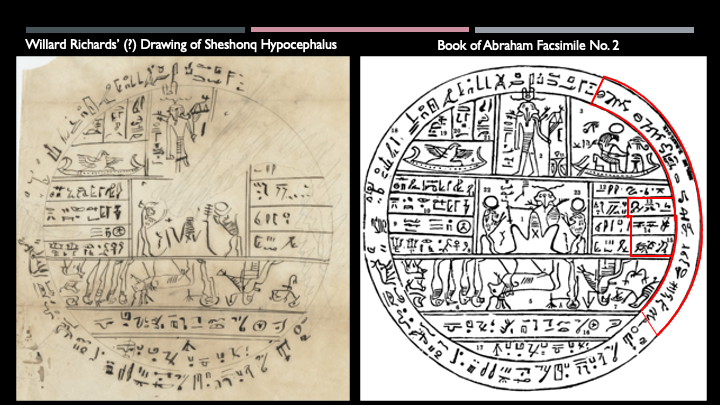
The original depiction of the Hypocephalus that is the origin of Facsimile 2 is not complete
, indicating that it was this way when Joseph got it. To make it complete, Joseph Smith adds in parts taken from other pieces of papyri. The Egyptian text that he adds is taken from Jospeh Papyri XI, which is the fragment that supports the current document theory .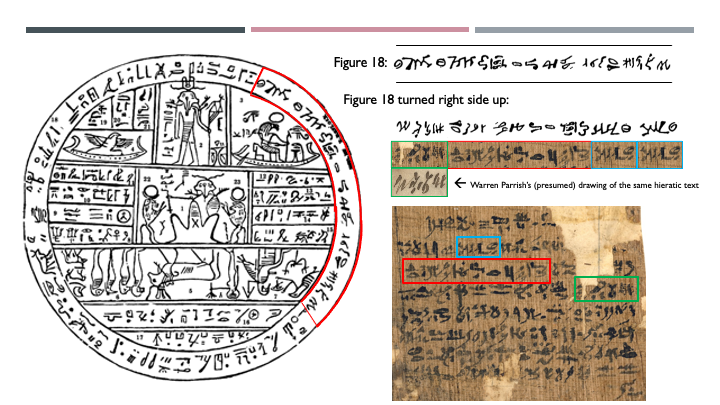
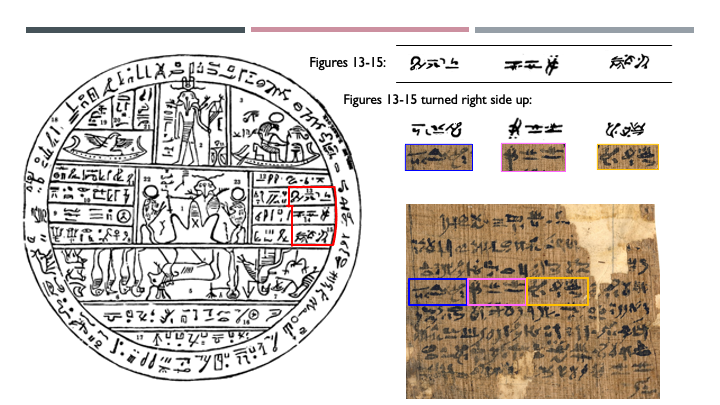
Joseph Smith then describes figures 12-21, which include these characters, as "will be given in the own due time of the Lord"
. This indicates that Joseph Smith never intended to translate these characters--showing that the characters for the Book of Abraham are on another papyri--not Joseph Papyri XI.The last theory for the origin of the text is that the text is not on any of the papyri that Joseph Smith owned. The papyri instead acted as a catalyst for a revelation about Abraham.
This theory aims to understand what Joseph Smith and other witnesses meant by the word "translate." We know that the translation efforts of Joseph Smith were not translations as we would understand in the secular way--there was some element of revelation involved. To better understand his translation process, let's go through some of the other translation efforts he was involved in.
These other examples of translations show that Joseph Smith did not think of "translating" in the traditional way that we do now. He viewed it more as a revelation, and the actual source of the translation was often not a part of this process.